

OVERVIEW
What Is Genetic Testing in Fertility Care?
Genetic testing in fertility care can include carrier screening for intended parents and preimplantation genetic testing (PGT) for embryos created through IVF.
Testing is optional and personal. It provides information that may help guide decisions, but no test is 100% accurate and results cannot guarantee a healthy pregnancy.

WHO MAY CONSIDER GENETIC TESTING
Is Genetic Testing Right for You?
Genetic testing is optional and personal. Your physician may discuss it based on your family history, previous pregnancies or treatment results.
Family History of a Genetic Condition
Known Carrier of a Genetic Condition
Recurrent Pregnancy Loss
Repeated Unsuccessful IVF Cycles
Chromosomal Rearrangement in a Partner
Age-Related Chromosomal Concerns

Carrier Screening vs. PGT
Carrier screening is a blood or saliva test done before or early in treatment. It shows whether you and your partner carry the same inherited condition that could be passed to a child.
Preimplantation genetic testing (PGT) tests embryos created through IVF before transfer:
- PGT-A — checks embryos for an abnormal number of chromosomes
- PGT-M — looks for a specific inherited single-gene condition
- PGT-SR — checks for structural chromosome rearrangements
THE PROCESS
Genetic Testing, Step by Step
Genetic testing can happen before treatment, during IVF or both. Your physician will explain which tests may be relevant to you and help you weigh their benefits and limits.
Discuss Genetic Testing OptionsStage One
Consultation & Family History
Your physician reviews your personal and family medical history, including any known genetic conditions, previous pregnancy losses or results from earlier testing.
If testing may be helpful, genetic counseling can help you understand the options, what results can and cannot tell you, and how they might affect your decisions.
Stage Two
Carrier Screening
Carrier screening is a blood or saliva test for the intended parents. It shows whether you carry a gene change for certain inherited conditions that could be passed to a child if both biological parents carry the same condition.
If both partners — or a parent and a donor — carry the same condition, preimplantation genetic testing for that condition (PGT-M) may be discussed.
Stage Three
IVF, Embryo Culture & Biopsy
Preimplantation genetic testing (PGT) requires embryos created through IVF. Embryos grow in our laboratory to the blastocyst stage, usually day 5–7.
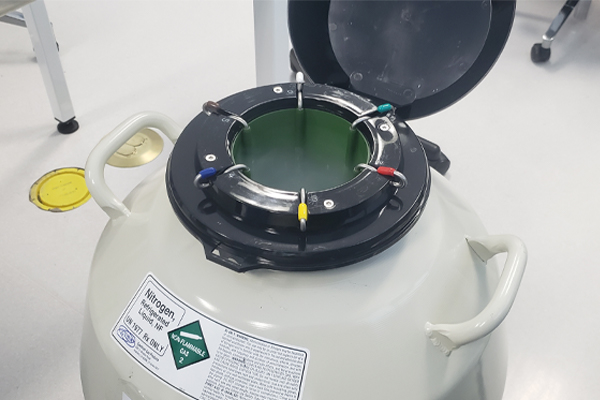
Our embryologists then remove a few cells from the outer layer of each embryo — the part that becomes the placenta — and the embryos are frozen by vitrification while testing is completed.
Types of PGT:
- PGT-A checks embryos for an abnormal number of chromosomes
- PGT-M looks for a specific inherited single-gene condition
- PGT-SR checks for structural chromosome rearrangements
Stage Four
Results & Embryo Transfer
Samples are analyzed by a specialized genetics laboratory. Your physician reviews the results with you and helps you decide which embryo to transfer in a later frozen embryo transfer cycle.
Every plan is personal. Your care team will let you know which steps apply to you and when.

Genetic Testing Costs
Costs depend on the type of testing — carrier screening, PGT-A, PGT-M or PGT-SR — and on the number of embryos tested. We provide a personal estimate after your consultation.
Some plans cover carrier screening or testing for known genetic conditions. Our team can help you review your benefits, and monthly payment plans are available through our financing partner, CapexMD.
Explore financing optionsYOUR CARE TEAM
Careful Embryo Handling in Our Onsite Lab
Embryo biopsy requires precision. Embryology work is done in our onsite, open-concept IVF laboratory, led by a director who previously led a lab ranked #1 in the US for IVF success.
Your physician will help you weigh the benefits and limits of testing so you can decide what is right for your family.
Meet our team


FAQ
Genetic Testing Questions
What is PGT-A?
PGT-A (preimplantation genetic testing for aneuploidy) checks embryos for an abnormal number of chromosomes. It may help guide which embryo to transfer, but it cannot guarantee a pregnancy or a healthy baby.
What is the difference between carrier screening and PGT?
Carrier screening tests the intended parents to see if they carry an inherited condition. PGT tests embryos created through IVF before transfer.
Is embryo biopsy safe for the embryo?
Biopsy removes a few cells from the outer layer that forms the placenta, not the part that becomes the baby. As with any lab procedure, there are some risks, which your physician will discuss with you.
Do I need PGT?
PGT is optional. It may be discussed if you have a known genetic condition, recurrent pregnancy loss, repeated unsuccessful IVF cycles or other specific concerns. Your physician will help you decide.
How accurate is PGT?
PGT is a highly specialized test, but no test is 100% accurate. Confirmatory prenatal testing during pregnancy may still be recommended.
Does insurance cover genetic testing?
Coverage varies by plan and by type of test. Check with your insurer about carrier screening and PGT. Our team can help you review your benefits.
Have another question? Contact our team or call +1 (424) 212-4087.


Ready to Talk About Genetic Testing?
Schedule a consultation with one of our fertility specialists in Southern California.